Top bar page nav

Saturday, May 27, 2017

In Gender & Development Work, Remember: Development itself is Gendered

Julie Sherbill is a first year Peace Corps Volunteer serving near Marrakech. Having lived in Turkey and worked for an international fellowship program, she believes well-designed cultural exchanges are crucial for a more peaceful and just world. As a Volunteer at a new site, you can often find Julie closing her eyes and repeating to herself over and over again that our value is based in relationships and not in productivity. Read more about her service on her blog: In the End, We’re All Shoes.


Julie Blog Pic kulchi.jpg


In Gender & Development Work, Remember: Development itself is Gendered
By Julie Sherbill
See if you can spot what these three anecdotes have in common. One is from home, and two are from my Peace Corps service so far.
  • I am volunteering at the annual Human Rights Campaign (HRC) National Dinner, which is worth several hundred dollars a ticket. I am standing with my friend and fellow volunteer, an LGBT activist from Egypt, when an older white man, an attendee, approaches us. In a “father-son” type way, he grabs my friend’s shoulder and asks, “now how can we help the horrible situation for LGBT folks in the Arab world?” As the man walked away, my friend wondered aloud, “why did that question bother me so much?”
  • At a training, as I’m drifting asleep, my friend wakes me up to tell me she’ll be leaving tomorrow. She talked with her husband in another city, who decided he is not comfortable with her sleeping out. “He loves me, he just doesn’t trust me,” my friend explained. I wanted to tell my friend to break off the relationship ASAP; I think she’ll be better off on her own, with freedom to do what she wants.
  • I’m doing the PACA mapping activity with girls from the Dar Taliba. I tell them to color in green the spaces where they feel safe. In the next class, we discuss. I ask them “do you have anywhere to go where you feel safe?” No. The next questions on the sheet: “what does this say about your daily life in your community?” and “what are some next steps?” The questions felt leading, but I asked them anyway. The girls said, “well, we learned that our lives are boring, and we have no safe space.” Another girl chimed in, “no, but we have to thank God for all that we have, and we have enough.”


These individual anecdotes all remind me of the fine, fine line between empowerment and paternalism within even the most well-intentioned human rights work, including Gender & Development (GAD) work. In theory, helping people connect their own personal hardships to larger systems of inequality in society would empower them. Why then, when I want to tell someone that they don’t have privilege, does it feel like I’m taking their own agency away?


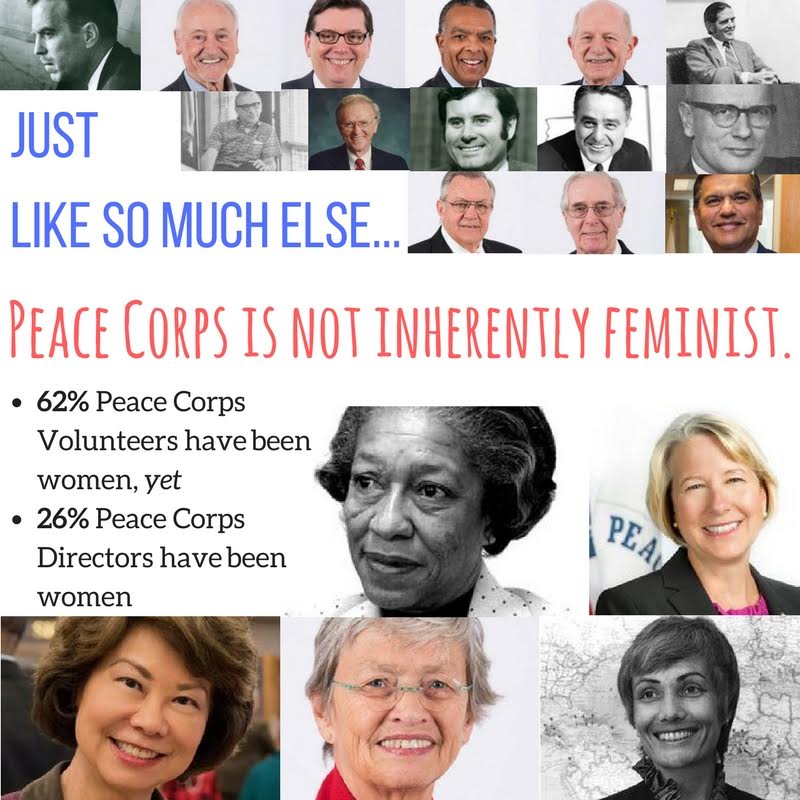
I think it’s because development work, both at home and abroad, has for so long been part of that same gendered framework that boxes people into inequality. Peace Corps, more specifically, emerged right at the end of the European colonial period, during a time when international (and domestic) development was even more patriarchal than it is today. We cannot take our work here out of this context—we should always be questioning how it colors our view throughout these 2+ years.


The Shadow of the Ugly American


My first instinct in helping, as you can see from my stories, is sympathy, which means “feelings of pity and sorrow for someone else’s misfortune.” Empathy means “the ability to understand and share the feelings of another.” But sympathy isn’t productive—instead, it is reductive. It reduces and simplifies the people you’re trying to help.


If I spend more time just hanging out with my friend and hearing about her life, if I learn how the girls in the Dar Taliba do have fun without a designated “safe space”—I can begin to understand them as full, complicated human beings, instead of underprivileged projects. In time, I might even be able to empathize with others—that is, to see where they’re coming from, get how they’re feeling, and know if there’s a way I can actually help them (and vice versa). I might not end up accomplishing that much on paper, but at least I’ll have real friendships.


Yet even if I’m befriending people and learning the language, there are still a thousands ways I can be the Ugly American. This is now a pejorative trope that refers to “perceptions of loud, arrogant, demeaning, thoughtless, ignorant, and ethnocentric behavior of American citizens mainly abroad, but also at home.” Since Peace Corps was established to counter this very picture, it seems like the Ugly American’s shadow is always hanging over my head, reminding me of what I could so easily, and unintentionally, become.


Personally, like so many with privilege, I have been able to benefit from systems of class and race without ever having to acknowledge the concept at all. Every time I post pictures on facebook or random epiphanies on my blog, I’m wary of becoming like voluntourists whose primary goal is not to understand their host community, but rather, show that they understand it.

Julie blog pic stats.jpg


Gender and Development, but also Gendered Development


I need to find a way to work productively here, even with that Ugly American ego creeping in the context, threatening to envelope me. If I am going to make these years worthwhile, I need to be myself—my outspoken, feminist, and eager beaver self. But I need to recognize when that self is actually pushing other voices down rather than amplifying them.


As individual Volunteers with varying levels of privilege, we must critique the power structures that lead to gender disparities not only at our sites, but also within the context of our Peace Corps experience. How do our diverse backgrounds affect the way we see life, do work, and relate to people at our sites? As gender advocates, we cannot be selective in what we view through this lens.


I believe productive work doesn’t have to be tangible—it can lie in relationships, conversations, and individual shifts in mindset. That’s what I love about GAD’s approach to work; even if I don’t implement a girls’ empowerment camp, there is still value in my individual conversations surrounding gender. Similarly, critical conversations about gendered development are vital among Peace Corps Volunteers, as our individual services do not exist in vacuums. After all, isn’t it true that we can have a higher impact on our own Peace Corps community than the sites where we serve?


---

Posted by Katie Bercegeay

Wednesday, May 17, 2017

Branching Out: Finding the Students that Want to Learn

Alyssa Meredith is a newly returned PCV who served in a rural Moroccan village near Zagora. Her interest areas include environmental awareness, women’s empowerment and healthy lifestyles. She helped lead the first day camp to happen at her town’s Dar Chabab and taught weekly classes at the Dar Taliba and Nedi Neswi. Her favorite pastime in Morocco was sunset walks in the djnan*. Branching Out: Finding the Students that Want to Learn By Alyssa Meredith


No Work in Sight
Many Peace Corps Volunteers have inevitably let the following phrase slip through their lips at some point in their service: “There’s no work in my site.” We all know this to be categorically untrue and yet the frustration of the slow seasons or the unreliability of certain students leads us to utter this hyperbole. So how does one master these feelings of helplessness when all you really want to do is “change the world”?


As the first volunteer in my site, I struggled throughout my first year to establish myself and what my role in the community would be. I naturally attempted to start at my assigned workplace, the Dar Chabab*, but after having various classes quickly fizzle and ultimately spending countless hours sitting in an empty building, I decided to branch out and find somewhere new to work. If the students weren’t going to come to me, I would go to them.


Discovering the Nedi Neswi
One afternoon my host sister showed me her workbook with designs for djellabas and other traditional Moroccan clothes, and I realized that my town must have a Nedi Neswi*. So I stopped by to observe a class and introduce myself to the women that studied there. A couple of the ladies asked me some questions about English in between copying down the day’s patterns and I mentioned that I’d be happy to teach a class if more people were interested. They jumped at the opportunity, and I began teaching beginner’s English along with aerobics.


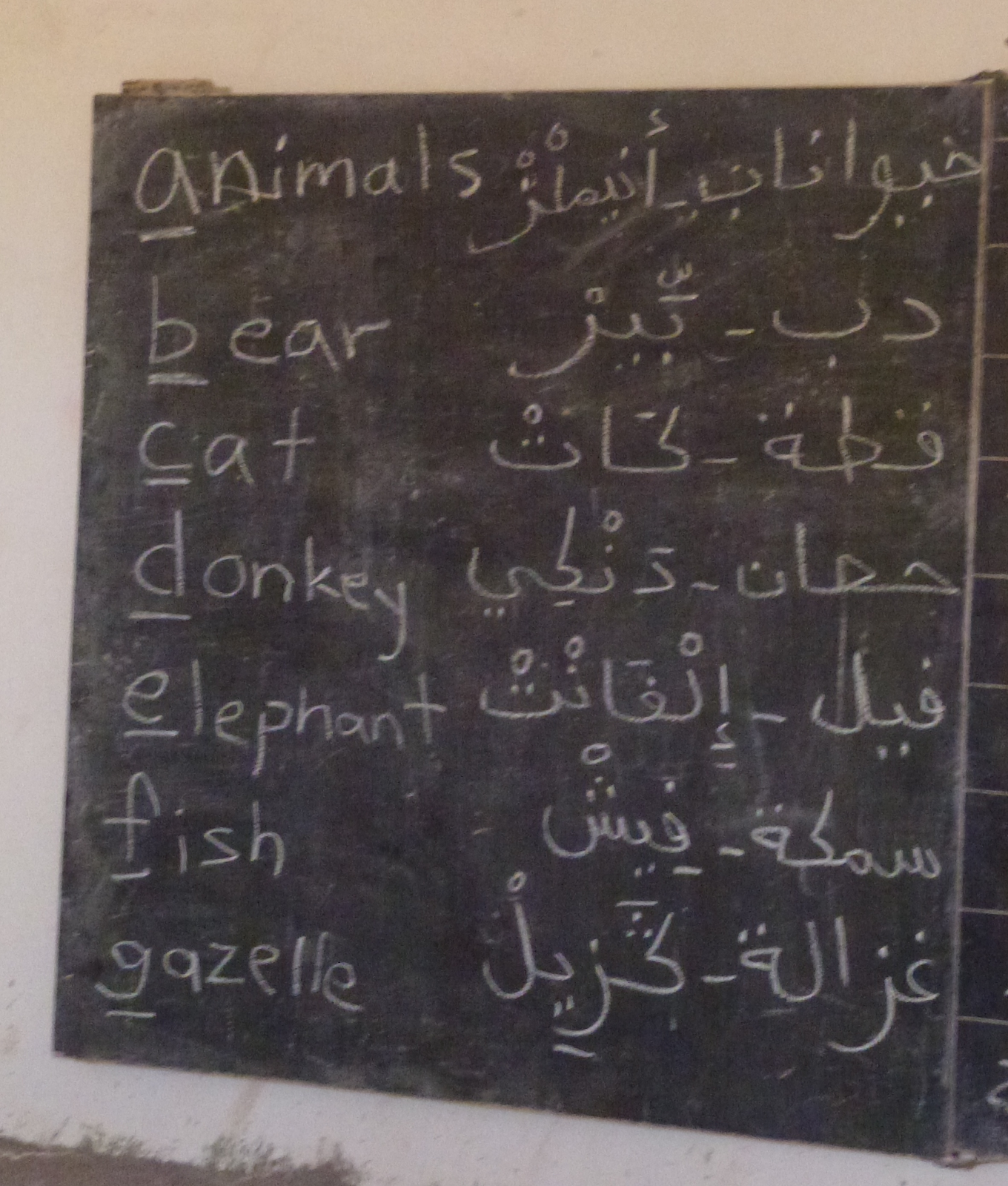
An English lesson at the Nedi on the alphabet and animals

Many (myself included at times) may question the wisdom of teaching these rural women English when they may not even know the more commonly used French or even standard Arabic and probably won’t have much chance to use what they learn. However, these ladies have a right to an education, an opportunity that may have been denied to them as a young student, and no matter their age or status, we should encourage their eagerness to learn. Additionally, the Nedi is a place for these women to get out of the house and socialize with their friends. It is a safe space for women to express themselves, to gather and to learn, and because of this, I continue to seek out work at the Nedi so that these women have access to these opportunities.


Expanding My Work Site
Attendance at my Nedi classes waxed and waned throughout the seasons, but it also opened up some new opportunities for work. After class one afternoon, two women approached me and asked if I could replicate the class in their village since they actually lived a few kilometers up the road. While I did not relish dealing with the logistical concerns teaching this class would require, I agreed because my week was pretty empty at this point, and I figured that I should be doing something useful with my time. Meeting these women was perhaps the best moment of my service because it led to some of my most fulfilling work. The people in this douar* live just far enough away from the central action in town that they aren’t able to participate in most of the local functions, especially the women. Because of this, I found that these students were especially eager to learn and I had higher attendance rates and better participation than any of my previous efforts.


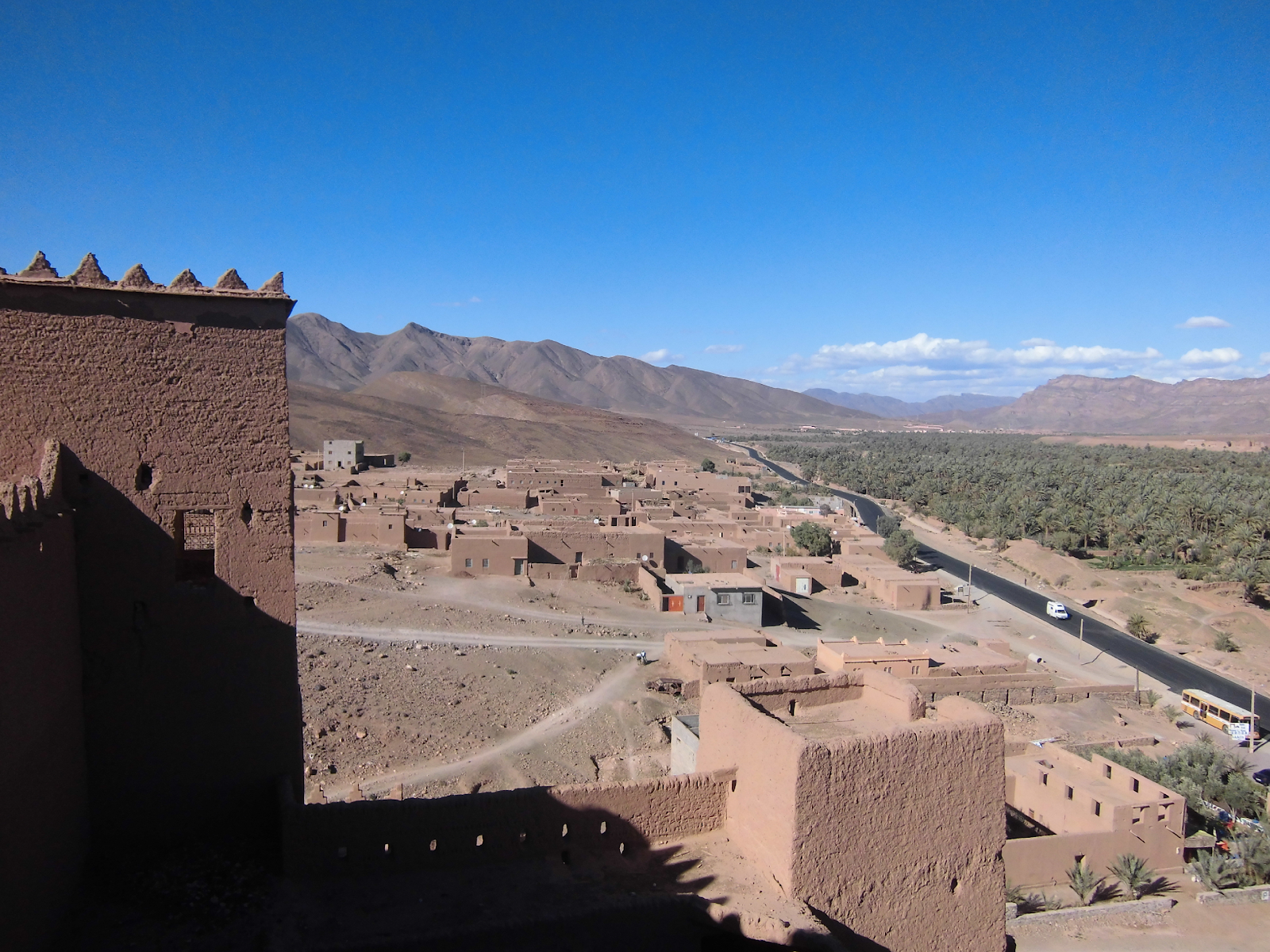
View of the village where I taught life skills atop a 300 year old kasbah

I started with similar classes that focused on English and exercise and saw some encouraging progress in my students. They even wanted to continue during Ramadan which was quite a feat while we were all fasting in the brutal heat. Through this class I met one of my future counterparts. She confided in me that although she had dropped out of school early, she still wanted to work and to do something with her life. She suggested the idea of working together to teach younger students in the coming fall. When Peace Corps advertised the life skills training, I thought it would be a great way to move forward.


Focusing on Women’s Empowerment
We decided to make the new life skills class  an exclusively female class because we wanted these girls to be able to truly discuss their feelings and to find confidants and role models among their peers. Using the life skills curriculum as our base, we wove in themes of women’s empowerment to give the women additional examples of strong women. We talked about Fatima Al Fihri and the assets that helped her create the world’s oldest university in Fes. We drew community maps and discussed how the spaces available may or may not be open to women and how these buildings reflect the community’s values. When the curriculum presented a story about Nelson Mandela and surviving tough times, we paired it with the story of Malala Yousafzai and read about her speech to the UN highlighting girls’ education.


Working in another douar offered me additional opportunities for work, expanded my community network, introduced new people to the idea of Peace Corps, and gave me an excuse to do some exercise each week as I make the trek to and from class. Over the course of my service, I had to convince myself that it was okay to leave behind the classes that weren’t productive and find the people that wanted to work with me. As a new volunteer, if you find yourself at a loss to start classes, I’d encourage you to branch out and find a new base for your work by getting to know the people in another douar.

Moroccan Arabic References
*djnan: palmary
*Dar Chabab: youth center
*djellaba: traditional hooded robe worn by Moroccans
*Nedi Neswi: women’s center, usually a space for the women to learn traditional skills such as sewing or classical Arabic

*douar: village


--- Posted by Katie Bercegeay

Thursday, May 4, 2017

Sexual Assault Awareness Month Reflections & Resources 2017


While Sexual Assault Awareness Month has come to an end, the need to spread awareness and advocate against sexual harassment, violence, and "rape culture" has not.

Here is a short list of resources shared among Peace Corps Morocco Volunteers and Moroccan peers throughout the month of April. Let's continue to stand up for respectful treatment of all persons, including ourselves, and challenge others to do the same each day.


On challenging the normalization of sexual harassment and assault:

On coping & self-care:

On sexual harassment as a PCV in Morocco:

On how to advocate and educate at site:

Know of other resources you'd like to add to this list? Have suggestions for how we can better support each other in dealing with harassment while at site? Need an ear? Let us know.


---
Posted by Katie Bercegeay

Sunday, April 2, 2017

2017 Cultural Consultant & Translation Program Recruitment Successful


Peace Corps Morocco’s Gender and Development (GAD) Committee is pleased to announce a successful recruiting season for the 2017 Cultural Consultant and Translator (CCT) program.

We are thrilled to have received an overwhelming response from a diverse pool of applicants with impressive achievements, qualifications, and experience. In a short period of time, over 100 youth from around Morocco applied to assist the GAD committee with various projects on a voluntary basis.  Forty outstanding applicants have been selected to serve as CCTs in 2017. We look forward to working alongside these passionate individuals over the course of the year.

Many thanks to everyone who applied for the CCT program this year. You and your dedication to Gender and Development in Morocco are immensely appreciated!

The CCT application form is now closed until next year.

About the CCT Program

GAD Morocco’s Cultural Consultant and Translation (CCT) team consists of select Moroccan volunteers who assist members of the GAD committee with developing culturally appropriate and relevant resources and trainings for Peace Corps Volunteers and Moroccan counterparts. CCT tasks may include assessing GAD-created materials for cultural sensitivity, co-facilitating presentations and workshops, creating and writing content for the GAD blog, creating new toolkits and resources for PCV and counterpart use, and translating documents from English to Darija, French, Tamazight, and/or Tashlheet.

CCT assistance on projects is primarily done remotely and online.  CCTs are unpaid volunteers who work on projects collaboratively with GAD members on a sporadic, as-needed basis.


Up Next for Selected CCTs

Congratulations to newly selected Cultural Consultants and Translators (CCTs)! We very much look forward to working with you over the course of the year.

The GAD committee is currently reorganizing and developing tasks and projects for the upcoming year. If you have been selected as part of the CCT team, you are now part of a pool of 40 great counterparts who will collaborate with us on these tasks and projects on an as-needed basis.
As soon as a task or project becomes available, we will be in touch with you via email. In the email, we will include a summary of the project or task, instructions, deadline, project lead contact information, and other supportive materials. We will do our very best to match you with a task or project based on your availability, background, and topic of interest. Additionally, at the end of the 2017 cycle, we will work to provide certificates as well as letters of recommendations upon request for your contributions.

In the meantime, learn more about the current GAD Committee and explore our current resources available for Peace Corps Volunteers and counterparts.

How to Stay Involved Until Next Year

Even if you were not selected for this year’s CCT pool or missed the application window, we highly encourage you to stay abreast of what GAD is up to. Stay connected with us on our website at gadmaroc.blogspot.com.

If you have a great story highlighting gender and development work in your community, consider collaborating with the GAD committee to write and publish a post on the GAD blog this year. Shoot an email to gadmaroc@gmail.com, and we will gladly review your ideas to see if they are a good fit for the blog.

Be sure to check back on the website if you are interested in applying for a CCT position next year. We will also keep your contact information on file should similar opportunities open up in the near future.


---

Posted by Katie Bercegeay

Saturday, March 11, 2017

Know Your GAD Committee, Spring 2017

January 2017 Committee Meeting in Rabat

Know Your GAD Committee, Spring 2017

Some of us are still 3 months fresh as GAD committee members, and others of us are tipping our hats and closing service very soon. But all of us have been constantly at work with our mission in mind: to support, empower, and connect Peace Corps Volunteers and Moroccans as we work to make young men and women equal and active participants in the development of personal skills and of the whole community. 

Learn more about us as individuals (listed in alphabetical order by last name) below.

---


Sarah Amer, Vice Chairperson 2017

Salam! My name is Sarah and I am the Peace Corps volunteer located in Moulay Idriss Zarhoune in the Meknes-Fez region. Originally from Cleveland, Ohio, I am a first generation Palestinian American. In the past, I have served as an Air Traffic Controller for the United States Air Force. More recently, I completed my Master’s degree in Applied Communication Theories and Methodologies with an emphasis on Women’s Studies.  The obstacles I have encountered throughout my life due to being a female have pushed me to base my research on women’s empowerment as well as play an active role in promoting global gender equality. I love GAD because it gives me the opportunity to work with a diverse group of intelligent and motivated individuals that come from all walks of life with the same hope of spreading gender equality throughout the world.


Katie M. Bercegeay, Coordinating Officer 2017

Greetings! I'm Katie Bercegeay, originally from the Cajun heartland in south Louisiana by way of central Virginia. I'm now serving in a small, charming mountain town an hour from Fes.

I have a Bachelor's degree in English as well as a Master's in International Studies with a concentration on humanitarianism. Prior to Peace Corps, I worked in stateside refugee resettlement coordinating volunteers, donations, and external relations. I also have experience teaching English to international students at the pre-university level.

For much of my life, I have been inspired by women and men alike who have done incredible GAD work in both large-scale and everyday capacities. Now as a member of the Peace Corps Morocco GAD committee, I look forward to being inspired by the GAD work being done by my fellow PCVs and Moroccan counterparts, friends, and students.


Shawn Dubberly, Representative + Blog Master, Former Training Liaison 2016-2017

Hello, I’m Shawn but I often go with the Moroccan name given to me--Shayma! I live with my husband near Essaouira. I call Ohio my home because my parents live there, but I have lived in The Netherlands, China, Thailand and all over the Navy ports in the USA. I love GAD because gender work can be seamlessly incorporated into any type of Peace Corps program or sector: environment, small business, youth development--gender inequality can and should be addressed. I came into GAD in October of 2016 and focused my time on the blog. My goals included making the blog active with consistent posts and approachable to incoming volunteers by featuring success stories about everyday gender work took challenges and struggles into account. Peace Corps has a unique devotion to a grassroots approach. I can't wait to return to Morocco in the future and see what has flourished.


Julie Feng, Representative, Former Vice Chair 2016-2017

Hi, I’m Julie! I’m from Taipei, Taiwan and Seattle, Washington—and I’ve added another heart home to the list—Settat, Morocco, where I currently live with my husband and cat. I have a background in English education, creative writing, and social justice. GAD has always been at the center of my youth development work because it centers equality and empowerment. I strongly believe in gender work from a global and intersectional lens, and I will always be an unwavering advocate for marginalized voices.


Elizabeth Jay, Representative, Former Secretary 2016-2017

Hi my name is Elizabeth. I’m known around Peace Corps as Lou. I have a B.A. from DePauw University in Sociology and Anthropology with a minor in French and an M.A. from the University of Indianapolis in Sociology with a concentration in cross-cultural comparison. Before I came to Morocco I was a professor at the University of Indianapolis; I taught Intro to Sociology and Social Problems. Much of my academic background focused on women and society cross-culturally. This greatly influenced my decision to join Peace Corps and work with disadvantaged populations within the community, namely women. 

Much of my work in my three years here in Morocco has been focused on the empowerment of girls and women. After completing a Fitness Trainer TOT with my counterpart, Fatima, we started a women’s health and aerobics class in our dar chabab, or youth center.  We empower the women to focus on their overall health instead of body image through yoga, aerobics, kickboxing, and dance as well as discussions about health and diet. I’m also working with a women’s association in my community to hand-sew reusable feminine hygiene products that can be sold throughout our region to promote a more economic, hygienic, and environmentally-friendly alternative to disposable products, while also promoting the growth of our association and its impact within our community. I’m excited to be a part of the GAD committee to help other PCVs see how they can do GAD work within their communities on a daily basis through conversations and toolkits. I truly believe it’s the small things we do day in and day out that make the biggest impact.


Kika Kaui, Representative, Former Chairperson 2015-2017

Hi all! My name is Kika (which means cake in Darija) and I am volunteer in Tiflet, a large site near Rabat.  I have roots in Hawaii and Washington State, and a background in both Human Rights and Physiology. As a GAD committee member and Chair, I have been inspired and motivated by the incredible work done by both Peace Corps staff and volunteers as well as external Moroccan organizations, associations, and individuals. 

I have been most proud of being a facilitator of the Gender Advocacy Training in Fez and working to develop, update, and disperse GAD’s abundant resources. In site, my primary projects are teaching English and women’s health and fitness classes. In my free time, I love distance running, drinking coffee, reading, and cooking with my husband.


Heyab-Mariam Ogbasion, Training & Reporting Officer 2017

Hello! My name is Heyab-Mariam Ogbasion, and I’m currently serving in a large community on the outskirts of Errachidia. Although originally from Memphis, Tennessee, I also call Washington, DC home <3. I’m a first generation Eritrean-American, and growing up in the US with this identity has motivated me to be active in my community, specifically on issues of gender empowerment and equality.

I hold a Bachelor’s in Finance & International Business and more recently a Master’s in Organizational Development, so it is safe to call me a data and analytics geek! With that being said, I am super excited to collaborate with PCVs, Moroccan counterparts, and PC staff as I fill the new role of Training and Reporting Officer for the upcoming year. I’m confident of our Staj 98 and the passion and expertise each of you bring towards GAD related work.


Jessica Wamala, Chairperson 2017

Hey, Jess “Malak” Wamala here! I live in a city one hour from Fes. I arrived in Morocco on the heels of finishing my research masters (Mphil) in Modern Middle Eastern Studies as a Rhodes Scholar from the University of Oxford and hold a second masters (M.A.) in Political Science from my undergraduate alma mater Villanova University. As a global citizen, I have lived in or travelled to 33 other countries for educational opportunities, business, academic conferences, research, immersive learning and cultural exchange. Passionate about gender empowerment, systems change, and diversity and inclusion, I have advanced these issues for the U.S. State Department in various capacities and published work on diversity in international affairs.

I bring a very energetic attitude and goal-oriented vision to my new position as Chairperson of GAD, and I am excited to make GAD resources more accessible and inclusive for both PCVs and Moroccans alike. I suspect this group of hardworking women will surpass any expectations of professionalism, approachability, and friendliness and I want everyone to know we are open to feedback, collaboration, and innovation.


Feel free to contact the Gender and Development committee at any time via: gadmaroc@gmail.com.


---

Posted by Katie Bercegeay